Cornwall takes geothermal opportunity to Westminster
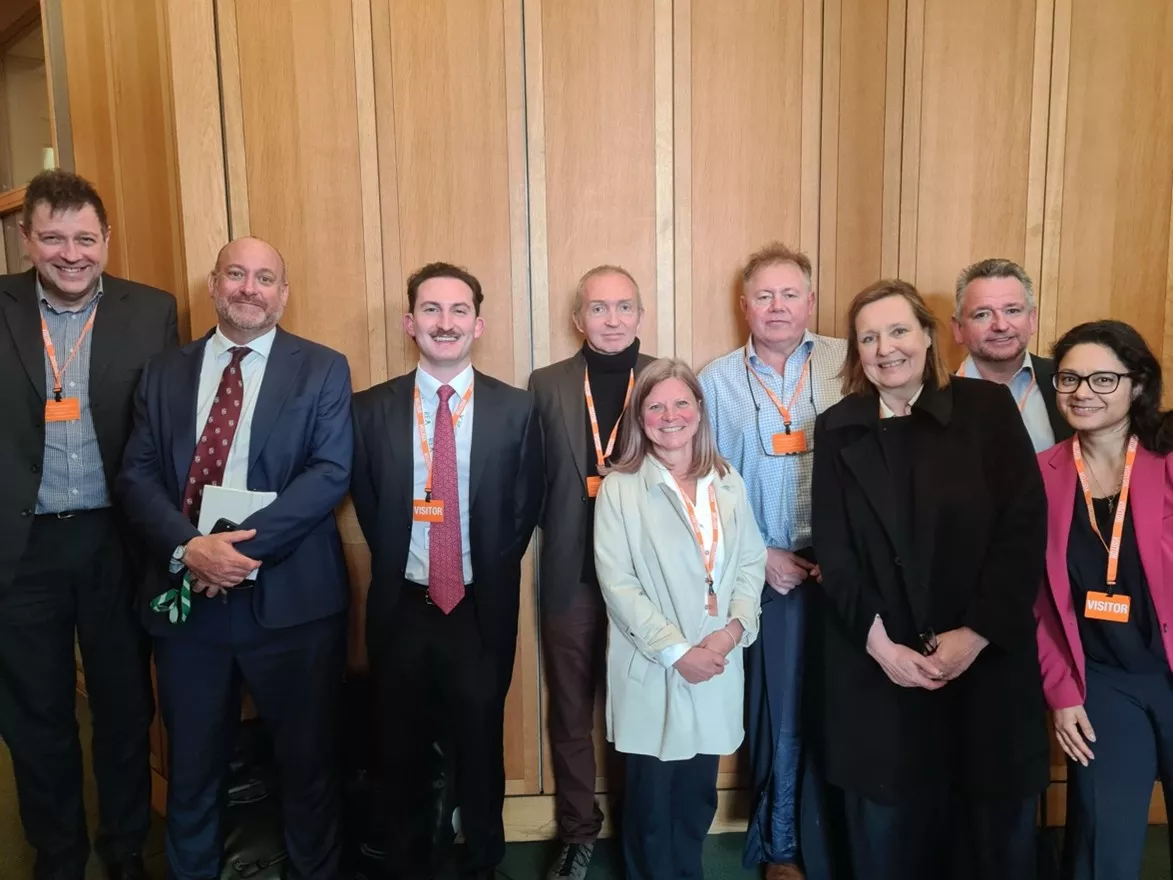
CORNWALL took the geothermal sector into the heart of government earlier this month with a roundtable in Portcullis House, Westminster on 15 April. Chaired by Perran Moon, MP for Camborne, Redruth and Hayle, Cornwall Council co-ordinated a roundtable that included Sir Alan Whitehead, Minister for the Department for Energy Security and Net Zero, Lord John Hutton, Chair of the Cornwall and Isles of Scilly Economic Forum and delegates from key government departments and agencies, including the Office for Investment, Department for Science, Innovation and Technology and GB Energy.
Lauren Boyd, Director of the Office for Geothermal from the US Department for Energy presented to the roundtable on the US programme that has enabled the development and significant success of the geothermal sector in the US, which is now widely utilised by big tech to support increasing energy demands.Global consultancy, ARUP presented on the pipeline of UK geothermal projects and Cornwall’s live geothermal sites, Eden Geothermal and GEL also presented on the developments so far and the current barriers to accelerating the development of a UK geothermal sector.
MP Perran Moon said: “I’m hopeful that this roundtable was a huge wake up call for a number of government departments to the potential of geothermal in Cornwall and across the UK to provide renewable (24/7) baseload power. We need to move away from fossil fuels, and the UK is miles behind other countries in using geothermal to provide energy security, heat, access to critical minerals and to support rising energy demands. Geothermal has huge potential to mitigate against a number of the energy challenges the UK is facing, including easing electricity on the grid and the transfer of skilled workers from the oil and gas sector.”
Cllr Tim Dwelly, Cornwall Council’s cabinet member for economic regeneration, said: “Cornwall is leading the way with geothermal technology in the UK, and we need to make sure the potential we have is understood in Westminster. We have the ability to contribute hugely to the UK’s growing demand for energy in a responsible way that brings value to our communities and I believe events like these will help ensure those ambitions are realised.”
Geothermal can provide heat, power and access to critical minerals. Geothermal electricity generation currently requires drilling deep wells in heat-producing granite areas, and Cornwall’s geology makes it one of the areas in the UK, alongside the north-east and the east of Scotland, where there is the highest potential for the production of geothermal energy. Geothermal heat-only supply, such as the current set up at Eden’s geothermal site, requires shallower drilling and can be accessed in a wider range of geologies across the UK. Pipeline projects include an NHS imitative to use geothermal to heat hospitals across the UK.


Earlier this year, Cornwall’s GEL became the first UK geothermal site producing electricity from geothermal resources at their United Downs facility. GEL’s project is also leading in lithium extraction, with the geothermal brines proving to contain high levels of the critical mineral, lithium carbonate needed for batteries.
Ryan Law, founder and CEO of GEL, said: “I set out to prove with the United Downs project that geothermal power was possible in the UK and we now have the deepest well at 5.2km, producing electricity, heat and lithium, all from the same well.
“For the developing geothermal sector in the UK, the government’s current position creates a challenge as investors look at the global market and can see that the UK’s lack of policy, legislation and support are an outlier compared to many other countries.”
The Minister for the Department for Energy Security and Net Zero, Sir Alan Whitehead is a “fan and practitioner” of geothermal, having worked previously on the Southampton geothermal site.
Perran adds, “Government and the Minister are aware that the UK is behind in geothermal, and I’m determined to push for the acceleration of the sector for the benefit of Cornwall and the wider UK.”
Locally, Cornwall’s Good Growth Plan and Climate and Energy Plan name geothermal as having significant economic potential for the region, but national policy including the Modern Industrial Strategy, Clean Energy Sector Plan, and the Strategic Plans of Great British Energy and National Wealth Fund, all fail to mention geothermal. UK government is focusing on Small Modular Reactors to meet the ever-increasing demand for domestic baseload power supplies. The geothermal sector argues it should also be part of the solution, providing a scalable, low impact solution with multiple benefits, and is arguably a more accepted technology than nuclear, especially in regions with a strong history of mining.
Gus Grand, CEO at Eden Geothermal commented, “Eden Geothermal is in the process of fundraising, with our proposed drilling approach using technology that’s been used in the US. Wrap-around activity to help grow the wider sector, further drive innovation, attract investment and raise awareness of the technology would be extremely helpful to consumers, host communities and the supply chain.
“Geothermal has the potential to reduce costs – seen as one of the barriers to rolling out the sector and evidenced in the US – in the same way that wind and solar has. There will be no price shocks with geothermal, no downtime linked to the weather and no fuel imports – geothermal is right under our noses and as secure as the ground beneath our feet.”